MYCRMS
 Virtual Tour
CRMS Woke Everything Up: The Writing Life of Wendy Marston Lehmann ’87
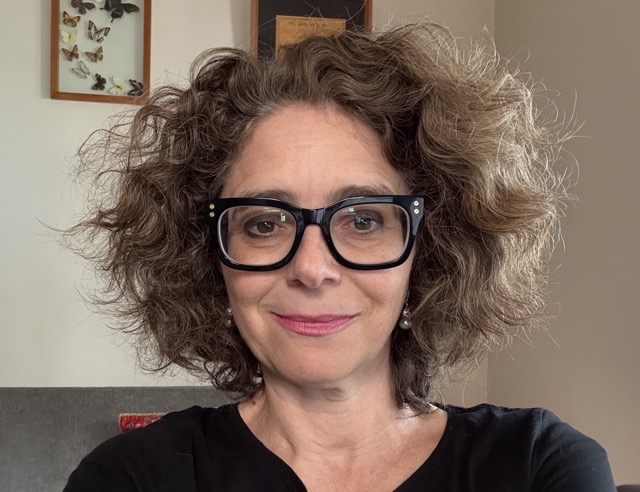
When Wendy Marston Lehmann was a teenager in Paonia, Colorado, she braced herself for the inevitable every time she went to the dentist. It was never about her teeth. “I would sit in the dentist’s chair, and he would warn the hygienist about my parents,” she recalls. In a coal-mining and ranching town that small, being the daughter of the people who ran the local newspaper meant there was nowhere to hide.
Her parents, Ed and Betsy Marston, had moved the family west from New York in the mid-1970s, eventually taking the helm of High Country News and turning it into one of the most respected environmental publications in the American West. For Wendy, though, Paonia was a place she desperately wanted out of. She got contact lenses, became a cheerleader, and, in her words, “stopped speaking in complete sentences” to fit in. One day she walked out of Paonia High School and told her parents she couldn’t go back.
A former babysitter, Catharine Kim Woodin ‘81, had attended Colorado Rocky Mountain School a few years earlier. That was the thread Wendy pulled. What she found at CRMS undid years of trying to make herself smaller.
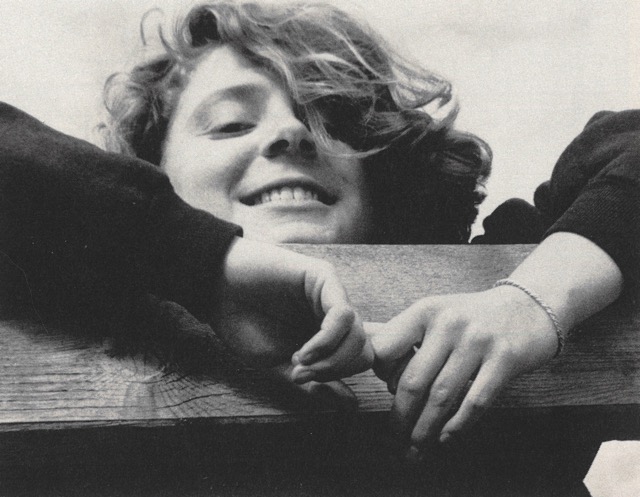
“CRMS woke everything up in me,” she says. “I didn’t have to curl my hair in the morning, I didn’t have to wear eye shadow, and I got to speak in complete sentences. It was all these classes, and I had a pretty crappy education in Paonia.”
The classes at CRMS hit her like a revelation. She read Hegel with Mark Clark — and would read him again at Columbia, still loving him. She took American history with Steve Bunnell, whose son, her classmate Tom Bunnell, painted a piece that still hangs on the dining room wall of Wendy’s home today. “Those classes were really shocking,” she says. “We were allowed to read books, and we were allowed to talk about books. The whole thing was mind-blowing to me.”
The mountains took longer. Wendy had hiked and backpacked her whole childhood and hated it, and CRMS kept placing the city kid in ski groups well above her ability. “I think I presented as a much more with-it person than I was at the time,” she laughs. But the discomfort did its work. “It really was helpful,” she says. “I wouldn’t have survived without CRMS. I would never have made it through.”
A Writer Finds Her Place
CRMS pointed Wendy toward Columbia University in New York — and toward the city itself. “I walked on the campus and I thought, here, I can be at home here,” she says. There would be a deeper irony at work, too: her father had grown up in Queens, promptly escaped, and was horrified when Wendy later bought a house in Astoria, Queens, because he couldn’t believe she was going back. As she puts it, “I guess it all does come around.”
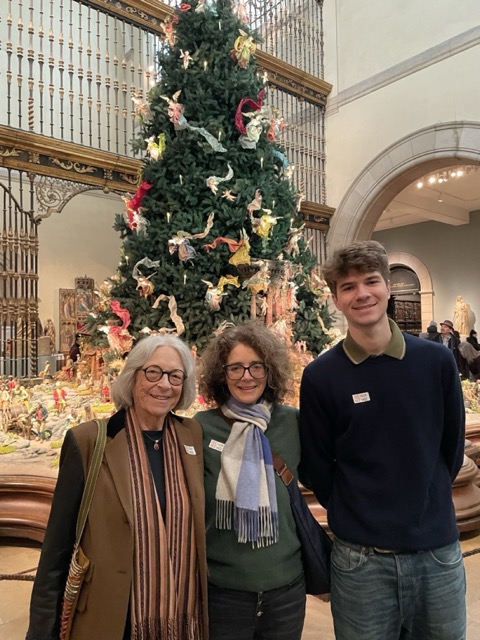
She majored in English, and after a stint fact-checking at a science magazine — a foot in the door her mother helped open — she discovered she had inherited something of her father’s gift. Ed Marston had been a physicist turned journalist, a natural explainer of complicated things. “It was a pretty organic fit for me,” Wendy says. She became an editor, and from there built a freelance career, writing for The New York Times, Newsweek, and a string of science magazines, and authoring a book along the way.
Then she found the industry that has sustained her for twenty-five years: pharmaceutical advertising, the science arm of the ad world. Most of her work is aimed not at patients but at physicians, which means it has to be evidence-based and pass muster with the FDA. “I can figure out the science, I can figure out how the agency works,” she says. The constraints are the whole game — working within rules and tight word counts to make something sing. “As they used to say, it’s like doing ballet in a closet.”
She also wrote for television alongside her husband, a longtime TV and public broadcasting veteran, collaborating on episodes of Sesame Workshop’s Sesame Street and The Not Too Late Show with Elmo.
Hard Lessons, Honestly Told
Wendy is refreshingly candid about the writer she used to be. As a young journalist, she says, she sometimes felt like a fraud — fast, talented, and not always careful. The lesson she returns to is a piece she wrote for Outside magazine early in her career, about someone blowing up a boulder on Forest Service land and altering a small river. Pushed by an editor, she let the article imply the Forest Service itself was responsible. It wasn’t. “The (Forest Service) guy called me and yelled at me,” she remembers. The actual culprit turned out to be, in her words, “some psycho” — and Wendy got to write the follow-up that solved the mystery.
She’s tougher on her younger self than anyone else would be. “You can be very irresponsible as a young person,” she says. “If you can slime in there as a young person, you can really convince people.” Today she considers herself a far more responsible science writer than she was at twenty-six — proof that the best writers aren’t born so much as seasoned, the kind of growth CRMS prized in her.
Writing in the Age of AI
Like everyone who works with words, Wendy has watched artificial intelligence arrive on her doorstep, and she’s clear-eyed about it. The tool has genuine uses — she recently leaned on it to unpack acronyms and supply context for a subject she didn’t know well, and it saved her hours. But when it comes to the actual writing, she’s unconvinced. “When it revises, everything’s flat,” she says. “You can’t really do it with AI and make it sound fun, like you want to read it.” And then there’s the quality she’s most confident no machine will master anytime soon: “It also doesn’t make jokes.”
Look Around You
The full-circle story didn’t end with Wendy. While her daughter stayed close, graduating from Vassar College this spring, her son is now a freshman at the University of Colorado Boulder — a New York City kid who fell for Colorado. The family had tried to send him to CRMS after COVID, and Wendy says he was dying to go; it didn’t come together, but he wears the CRMS shirt to this day. The Marston migration has run a complete loop: New York to Colorado, Colorado to New York, and back to Colorado again.
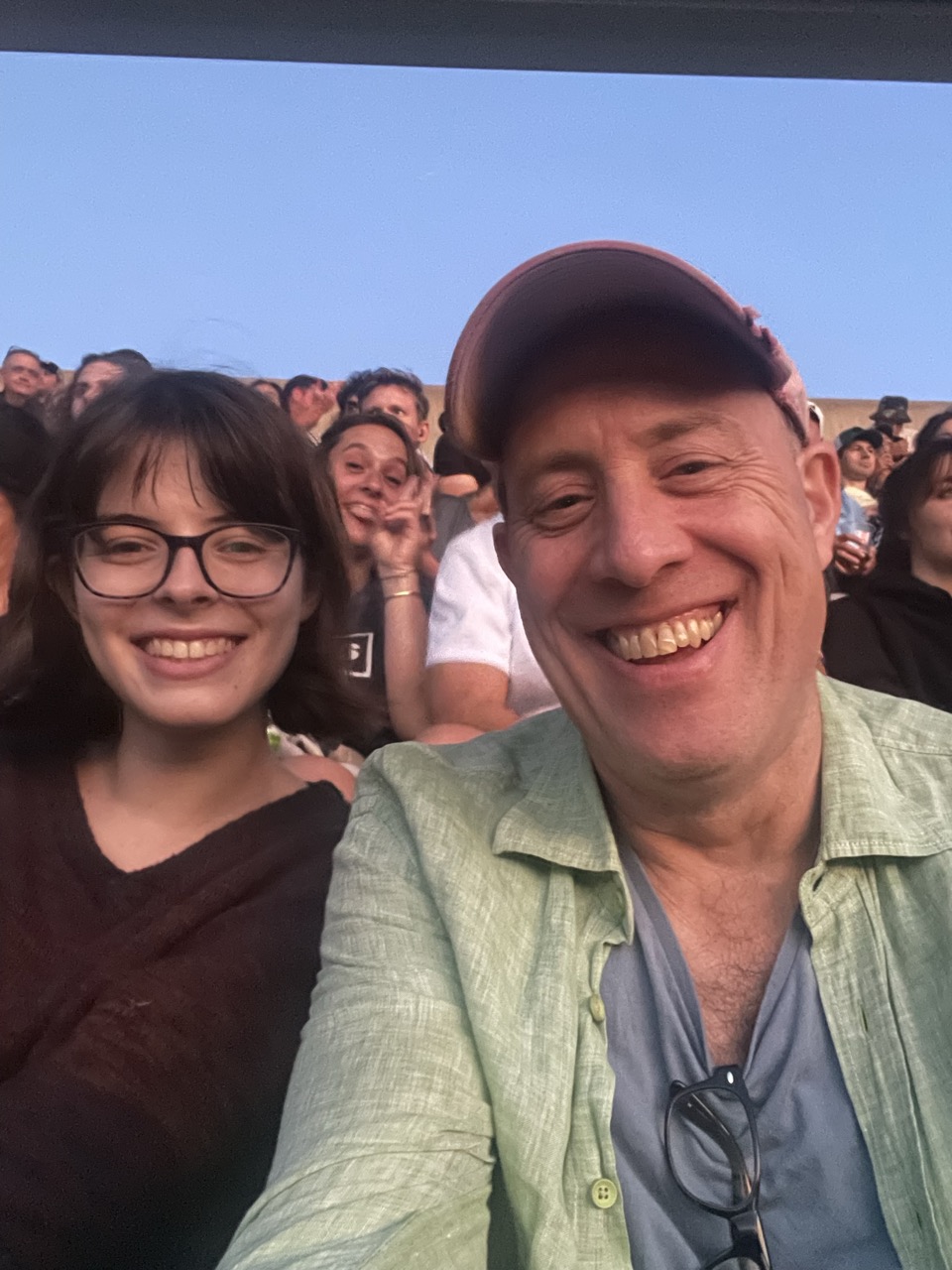
Decades and several careers later, the school still holds a singular place for her. “I’m very grateful to CRMS,” she says. “It really changed my life in a huge way. It’s such a special school. It’s not like most prep schools or most boarding schools.” For the writer nearly forty years removed from that dentist’s chair in Paonia, she means every word of it.
Asked what she’d tell CRMS students today, Wendy lands somewhere her old teachers would recognize. Having spent her first decade in New York without really seeing it, her advice is simple: “Look around and have some chats. More chatting.” She credits CRMS faculty with modeling exactly that. “They were people you could talk to,” she says. “I had never talked to grown-ups like that.”