MYCRMS
 Virtual Tour
Making Science Tangible: Matt Bowers Brings the Roaring Fork Valley Into the Classroom
For Dr. Matt Bowers, science begins with curiosity, grows through observation, and becomes meaningful when students realize that the questions they ask in class are connected to the world immediately around them.
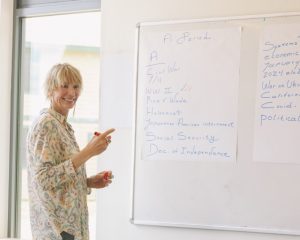
Now in his fourth year back at Colorado Rocky Mountain School, Bowers serves as the Great Teaching Chair in Science & Mathematics. His connection to CRMS, however, began fourteen years ago when he served as a teaching fellow and taught math before leaving to pursue a Ph.D. in neuroscience at Colorado State University. His doctoral work focused on the molecular biology of neurons, specifically how molecules shape cellular behavior within the nervous system. After earning his Ph.D., Matt taught for two years at Colorado College as a visiting professor of molecular biology before returning to CRMS in 2022.
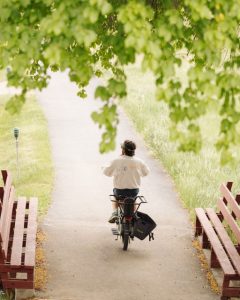
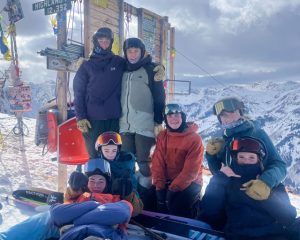
At CRMS, Matt teaches Ninth Grade Biology and AP Environmental Science, and is developing an Advanced Molecular Biology course for seniors for next fall. Beyond the classroom, Matt oversees the bike program and coaches in the ski program. It is a full CRMS life, one that blends academic rigor, outdoor education, and deep engagement with place.
That combination is central to Matt’s teaching. His academic background gives him command of highly technical scientific ideas, but his classroom approach is rooted in making those ideas tangible. He wants students to understand not only what scientists have discovered, but how scientific discovery happens.
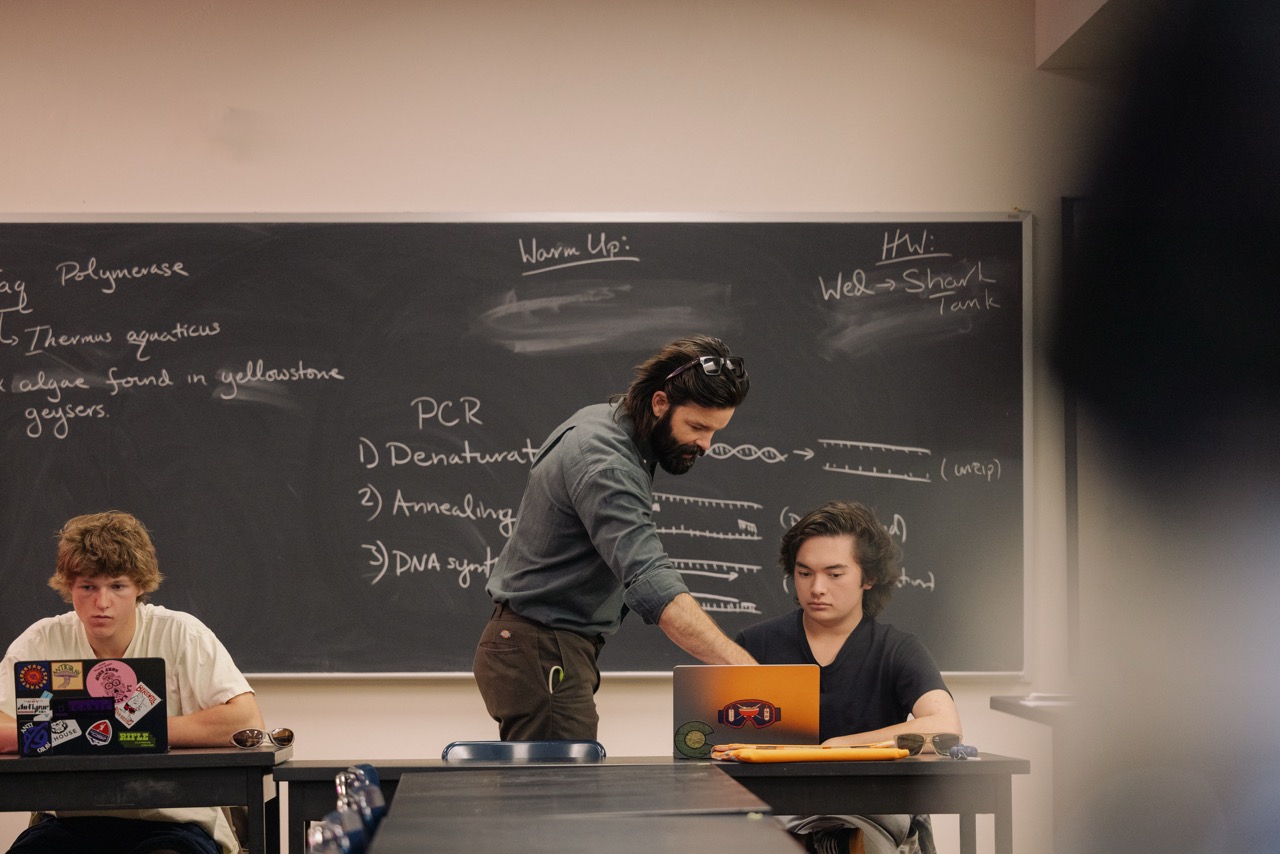
“I try to stress that science is driven by curiosity first,” Matt says. “It can feel like sometimes you’re memorizing facts about things people have figured out. But science is really about being curious, asking questions, and figuring out how to find answers.”
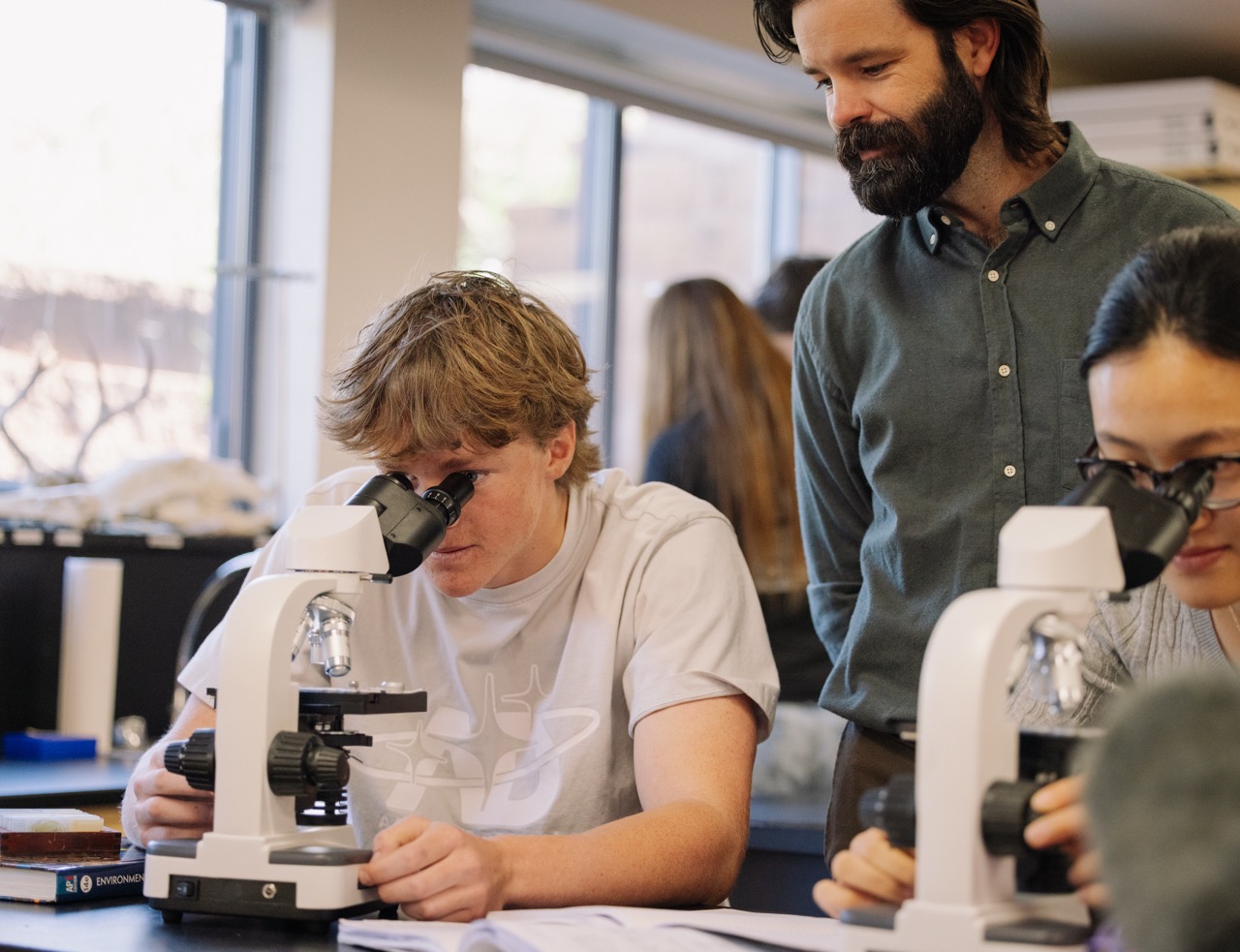
In Biology, this means students do not simply memorize the stages of mitosis. Instead, Matt asks them to step into the role of early scientists. Recently, his students examined onion root tips under microscopes, looking at cells in different stages of division. Rather than handing them a diagram, he asked students to sketch what they saw and arrange those observations like a comic strip, piecing together the sequence by which one cell becomes two.
The lesson was about cell division, but it was also about scientific thinking: observe carefully, notice patterns, make inferences, test explanations. In Matt’s classroom, science becomes something students can do, not just something they read about.
That approach is especially powerful in AP Environmental Science, where CRMS’s location provides a living laboratory. The school sits in a valley shaped by rivers, ditches, snowpack, agriculture, recreation, and competing demands on water. For Bowers, the Roaring Fork Valley is not just a backdrop; it is a curriculum.
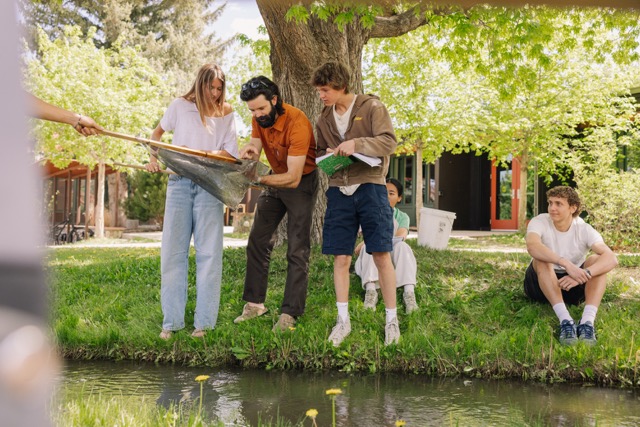
Students survey stream health by studying benthic macroinvertebrates—the small organisms living on the streambed that help indicate water quality. They compare local streams with irrigation ditches. They study ditch maps, examine water rights, and debate real proposals such as high-altitude water storage projects in the Crystal River watershed. Rather than asking abstract questions about how water should be managed in the West, Matt asks his students to consider actual places, actual proposals, and actual consequences.
For Matt’s students, the drought is not theoretical. Many see it in the rivers they kayak, fish, or pass every day. In class, discussions of snowpack, streamflow, irrigation, and water rights have unfolded in real time as students watch the valley move toward summer.
This year, those questions have become especially immediate. A warm, dry winter and low snowpack have made drought conditions visible across the region. As of early May 2026, the Roaring Fork Basin’s snowpack had fallen to historically low levels, with Aspen Journalism reporting May 1 snow water equivalent at 19% of normal, before later spring storms brought some relief. Roaring Fork Conservancy noted that early May precipitation helped, but the basin’s snow water equivalent remained only slightly above the record-low level recorded in 2012. (Aspen Journalism)
Matt is careful not to make environmental science feel hopeless. Drought, wildfire risk, water shortages, and ecological stress can be sobering topics. But he frames them as problems students can understand and help address. The goal is not alarm for its own sake, but informed engagement.
He wants students to see the tension clearly: ranchers and farmers need irrigation water, but rivers also need enough in-stream flow to support fish, aquatic plants, insects, and the broader watershed. Low water can create ecological choke points, especially if dry years compound over time. Yet understanding those systems is the first step toward managing them well.
As the year closes, Matt plans to bring updated Colorado River and watershed data into class so students can analyze the drought using the tools of science: graphs, long-term trends, local observations, and informed questions.
This is where Matt’s teaching comes together. A Ph.D. scientist with a gift for place-based education, Matt helps students see that science is not distant or abstract. It is in the onion root tip under the microscope. It is in the irrigation ditch outside the classroom. It is in the snowpack that did not arrive, the river running low, and the choices communities must make.
At CRMS, Matt Bowers is teaching students to look closely, ask better questions, and understand the living systems that shape their home.