 MYCRMS


 Virtual Tour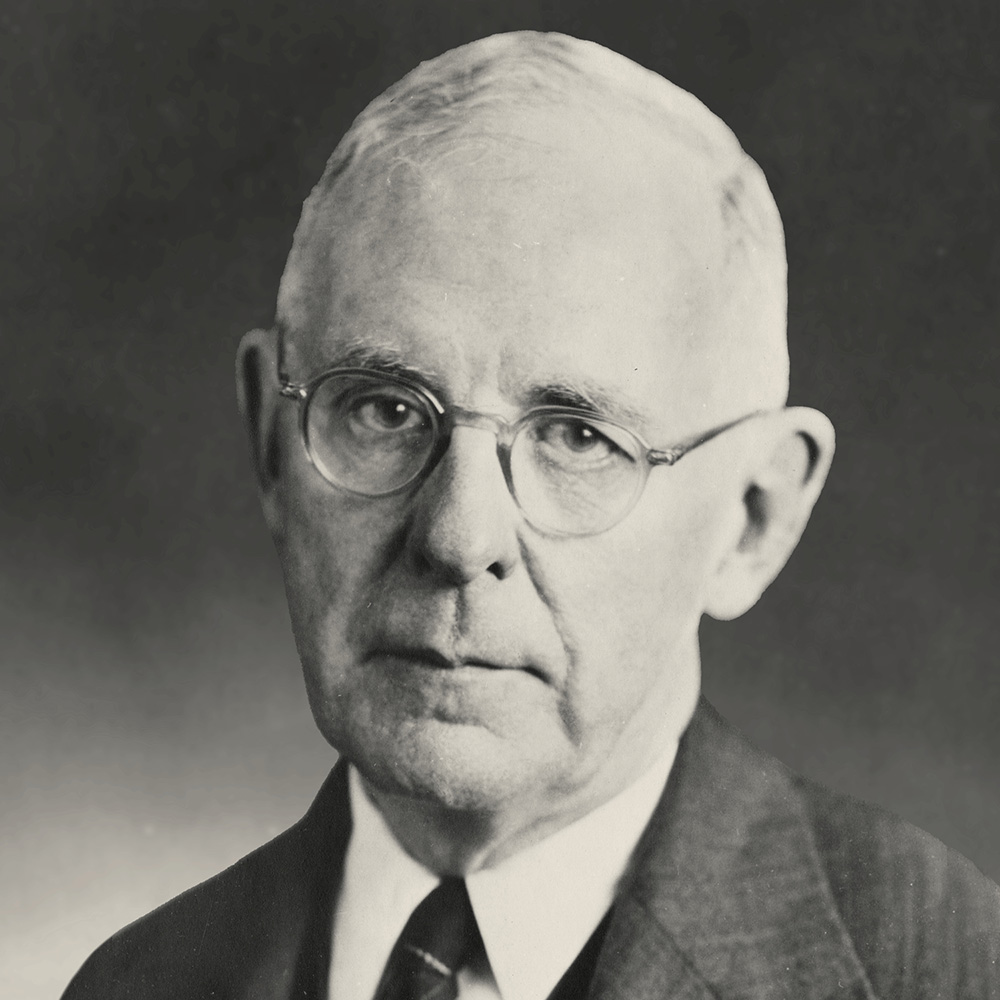
John and Anne Holden convinced Wells Kerr, the emeritus Dean of Phillips Exeter Academy, to come teach Shakespeare. According to John: “[Wells’] enthusiasm for his subject and his demand that each student memorize a goodly piece of the bard’s own words offer a refreshing antidote to self-expression that the students themselves appreciate.” Many alumni remark that even today they remember the lines memorized in Wells’ class. The twist? Wells had actually dismissed John Holden as a student from Exeter years earlier. Now his former student was inviting him to Colorado to help build something entirely new.
Born in 1885, Edwin Silas Wells Kerr earned his Bachelor of Arts degree from Princeton University in 1909, where he was inducted into Phi Beta Kappa. After graduation, he began his teaching career at the Asheville School in North Carolina, where he spent twelve years from 1909 to 1921.
In 1921, Kerr joined the faculty of Phillips Exeter Academy. His rise was remarkable: in 1928, he was appointed as the Academy’s first Dean, a position he held with distinction until his retirement in 1953. His impact was so significant that when he retired, the Academy’s original four-room schoolhouse was designated “the Dean’s House” in his honor—later renamed the Wells Kerr House and preserved as a historic landmark.
After retiring from Phillips Exeter in 1953, Kerr embarked on international teaching assignments that demonstrated his commitment to global education. He served as Visiting Professor of English at Robert College in Istanbul, Turkey (1953-54), taught at St. Paul’s School in Concord, New Hampshire (1955-58), and worked at Athens College in Athens, Greece (1958).
In 1959, Wells Kerr made a pivotal decision that would define his final chapter: he joined Colorado Rocky Mountain School as a part-time Shakespeare teacher. The irony is that Wells had dismissed John Holden as a student from Exeter years earlier. Now, his former student invited him to Colorado to teach. This move represented more than just a career change—it was a philosophical alignment with innovative education that combined rigorous academics with experiential learning in the Colorado wilderness.
Kerr’s role at CRMS was multifaceted. As a Shakespeare teacher, he brought decades of experience in classical literature to students in the mountain setting. His teaching style, honed at some of America’s most prestigious institutions, was now applied in an environment that valued both academic rigor and outdoor education.
Beyond teaching, Kerr served as an Honorary Trustee at CRMS from 1958 until his death in 1976—an 18-year commitment that demonstrated his deep investment in the school’s mission. As a trustee during the institution’s formative years, he was instrumental in shaping policies and strategic direction, lending credibility and gravitas to the young school.
Wells Kerr’s transition from the traditional Eastern boarding school environment of Phillips Exeter to the innovative mountain setting of CRMS reflected his adaptability and openness to educational evolution. Rather than simply retiring after a distinguished career, he chose to engage with a new educational model well into his eighth decade.
His expertise in Shakespeare and English literature proved particularly valuable at CRMS, where students were encouraged to think critically and creatively while engaging with the natural world. The school’s 320-acre campus outside Carbondale provided a unique backdrop for literary discussions and educational exploration.
Wells Kerr continued his association with Colorado Rocky Mountain School until his death on March 6, 1976, in Glenwood Springs, Colorado, at the age of 90. His 17-year commitment to CRMS represented nearly three quarters of the school’s existence at that time, helping establish its reputation as a distinctive institution that continues to thrive today.
From the First Twenty-Five Years